Source High Speed Flash Memory Card for Phones, Cameras, Computers
Find a high speed flash memory card from 30 verified listings. Compare capacities from 8GB to 128GB, read speeds of 20-30MB/s, and interfaces like USB and TF. Source reliable storage solutions for mobile phones, cameras, and computers with customizable options and global shipping.
Key considerations
Products List




Comprehensive Sourcing Guide
High Speed Flash Memory Card Sourcing Guide
Buyers must first distinguish between the specific form factors available in the current market, as the supply chain offers distinct variants like SD and TF cards with different physical dimensions. The observed listings indicate a wide range of capacities, from legacy 128MB units to modern 128GB options, requiring precise specification matching to ensure compatibility with target devices such as desktops, laptops, and servers.
Procurement teams should verify that the selected interface matches the host device requirements, noting that some listings specify USB interfaces while others indicate ExpressCard slots or internal installation types. Understanding these physical and logical interface differences is critical before placing orders, as a mismatch between the card slot type and the product interface will render the component unusable regardless of its speed grade or storage capacity.
Product Scope and Observed Listing Signals
The market presents a diverse array of product models, including specific identifiers like SD Card, TF-001, and FASTER002, each catering to different application needs ranging from mobile phones to cameras and computers. Buyers should observe that packaging varies significantly across suppliers, with options including standard packaging, single paper boxes, poly bags, and blister packs, which directly impacts the unboxing experience and retail readiness of the final product.
Quality signals in the listings often highlight attributes such as "High Quality" and specific speed grades like Class 10, which suggest performance capabilities suitable for high-definition video recording or rapid data transfer. However, buyers must treat these descriptive terms as observations rather than guaranteed performance metrics, ensuring that the specific model selected aligns with the actual throughput requirements of the intended application environment.
Technical Specifications to Verify
Verification of storage capacity is paramount, as the supply chain lists a broad spectrum of options including 1GB, 2GB, 4GB, 8GB, 16GB, 32GB, 64GB, and 128GB, with some entries noting specific capacities like 32GB or limits such as 128MB. Procurement teams must confirm the exact capacity per unit to avoid fulfillment errors, especially since some listings may conflate different capacity tiers or offer mixed batches that do not meet the strict storage requirements of the end user.
Read and write speeds are critical technical parameters that define the user experience, with observed data indicating reading speeds between 20-30MB/s and written speeds classified as Class 10. Buyers should demand explicit confirmation of these speed grades for the specific model ordered, as the physical dimensions and standard packaging do not inherently guarantee performance, and the actual data transfer rates must be validated against the device's operational needs.
Compliance and Safety Documentation
Regulatory compliance is a non-negotiable aspect of sourcing, with the observed listings frequently citing certifications such as CE, FCC, and RoHS as standard attributes for the products. These certifications indicate that the manufacturer has met specific safety and environmental standards, which is essential for exporting goods to global markets and ensuring that the electronic components do not pose hazards to users or the environment during operation.
Buyers must also verify the operational safety parameters, such as the specified storage temperature range of -25 to +85 Centigrade, to ensure the cards can withstand the environmental conditions of their intended deployment. Confirming that the product documentation explicitly supports these temperature limits and that the materials used comply with the cited standards is necessary to prevent data loss or hardware failure in extreme operating environments.
Cost Drivers and Commercial Terms
Pricing in this sector is highly variable, with observed ranges spanning from $0.80 to $680, driven primarily by capacity, speed grade, and the level of customization requested. The minimum order quantity (MOQ) also fluctuates significantly, ranging from as low as 2 pieces to as high as 4000, meaning that the total cost of ownership will depend heavily on the volume purchased and the specific supplier's tiered pricing structure.
Customization services, such as printing a custom logo or branding, are available and will inevitably influence the final unit cost and the minimum order thresholds. Buyers should negotiate clearly on whether the customization fee is a one-time setup charge or included in the per-unit price, and ensure that the lead time for sample orders, which can be as short as 2-5 days, aligns with the project timeline before committing to a larger production run.
Supplier Qualification and Quality Control
Supplier qualification should focus on the origin of the goods, with the majority of observed listings indicating production in Guangdong, China, a major hub for electronics manufacturing. Buyers must verify that the supplier has a proven track record of exporting to global markets and can consistently deliver products that meet the stated specifications, including the standard packaging and the specific model numbers like TF-001 or FASTER002.
Quality control processes must be rigorously defined, as the listings mention attributes like "High Quality" and "Compatible with Any Phones," but these are general claims rather than specific test results. Procurement teams should request evidence of batch testing, particularly for speed grades and capacity accuracy, to ensure that the delivered goods match the advertised performance and that the internal installation or external interface types function correctly in the target devices.
Long-Term Procurement Checks
Sustainable procurement requires establishing a clear relationship with suppliers who can support long-term availability of specific models and capacities. Buyers should verify that the supplier can maintain consistent stock levels for popular configurations like 32GB or 128GB cards and that they can accommodate future customization needs without disrupting the supply chain or increasing lead times significantly.
Regular audits of the supplier's quality control and compliance documentation are essential to maintain product integrity over time. Buyers must ensure that the certifications like CE, FCC, and RoHS remain valid for future production batches and that the product standards, such as the physical dimensions and interface types, do not change without prior notification, thereby protecting the compatibility of the memory cards with existing and future hardware ecosystems.
FAQs
What capacities are available for these memory cards?
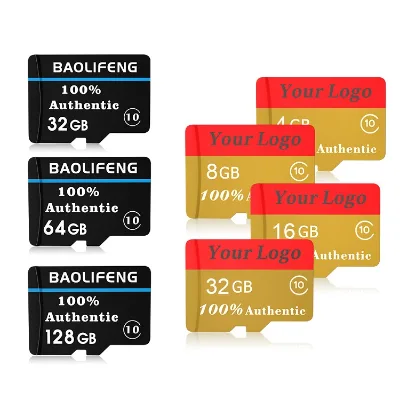
The product line offers a wide range of storage options including 8GB, 16GB, 32GB, 64GB, and 128GB. These capacities cater to various device needs, from basic mobile phone storage to high-resolution camera usage. Buyers can select the specific size that matches their application requirements while ensuring compatibility with standard card slots.
Can I customize the logo on the memory cards?
Yes, custom branding services are available for bulk orders. Buyers can print their own logo on the memory cards to enhance brand visibility. This customization option supports OEM requirements, allowing businesses to create unique packaging or product identities. The standard packaging includes individual paper boxes for each piece, ensuring safe delivery and presentation.
What certifications do these memory cards hold?
These memory cards are certified with CE, FCC, and RoHS standards. These certifications ensure compliance with international safety and environmental regulations for electronic products. Buyers can trust the quality and safety of the components, which is essential for global export markets. The certifications verify that the manufacturing process meets strict industry requirements for consumer electronics.
What is the typical lead time for sample orders?
Sample orders typically require 2 to 5 days for processing and dispatch. This quick turnaround allows buyers to evaluate product quality and specifications before committing to larger purchases. The efficient sample process supports rapid decision-making for sourcing teams. Bulk order lead times may vary based on production schedules and specific customization requirements requested by the buyer.
Which devices are compatible with these memory cards?
These memory cards are compatible with a wide range of devices including mobile phones, cameras, computers, and speakers. They support standard interfaces and fit into single card slots found in most consumer electronics. The design ensures broad usability across different brands and models, making them a versatile storage solution for various digital devices requiring reliable data retention.
What is the minimum order quantity for these cards?
The minimum order quantity starts at 2 pieces for sample evaluation purposes. For bulk procurement, the MOQ is typically 20 pieces, allowing flexibility for small and large buyers. This low entry point facilitates testing product quality and performance. Larger orders can be negotiated based on specific capacity requirements and customization needs, ensuring scalable sourcing options for diverse business sizes.